Poland Unpacked week 34 (10-16 August 2026)
Welcome to this week’s edition of our Poland Unpacked, where we deliver key insights and trends shaping the economic, corporate and political landscape. Catch the most important insights from Poland in this week’s briefing.
This article is a part of Poland Unpacked. Weekly intelligence for decision-makers
In 2008, Jakub Skałbania founded Netwise, a company that implements Microsoft solutions. In 2023, he and his business partner took it off NewConnect, the alternative market of the Warsaw Stock Exchange. Since then, he says, he received a takeover offer from investors every month. He turned them all down – until now. Netwise has become part of an IT giant with German roots, and together they plan to build one of Europe’s leading Microsoft partners.
Webcon is a Polish provider of a platform for automating business processes. In 2023, MCI Capital invested in the company at a valuation of PLN 250m (EUR 58m). At the time, Webcon accelerated its transformation towards a subscription-based (SaaS) model and AI-powered functionality. The results are already visible. In prestigious Gartner rankings, Webcon has been named among the world’s leading companies. Its founders told us how they plan to support Europe’s technological independence, grow fivefold and become the next billion-zloty business in MCI’s portfolio.
Korean investors are set to invest again near Wrocław. As a result, Europe’s largest battery factory will become even larger. LG Energy Solution, the company in question, has received a EUR 90m (PLN 390m) grant for the investment. This will not simply be an expansion of production capacity, but an investment in next-generation batteries and energy-storage systems. On the occasion, company representatives spoke to us about the industry as a whole and sounded the alarm that the European Union risks losing control of the sector.
Last week, Statistics Poland (GUS) released preliminary GDP data for the second quarter of 2026. Poland’s economy expanded by 3.8% in real terms in the second quarter. Adjusted for seasonal factors, GDP rose 0.9% quarter on quarter and 3.7% year on year.
The economy has picked up slightly. In the previous quarter, GDP increased by 0.6% quarter on quarter. More importantly, however, this was the seventh consecutive quarter of quarter-on-quarter growth. And the gains have been substantial: in none of those quarters did growth fall below 0.5%. The economic turbulence associated with the inflation wave triggered by Russia’s invasion of Ukraine is therefore now firmly behind us.
Poland is among the European countries with the strongest economic momentum. On a quarterly basis, only Slovenia (1.8%), Lithuania (1.7%) and Sweden (1.4%) recorded faster growth, while Finland posted the same rate as Poland.
Poland’s strong position is even more apparent in annual terms. GDP was 3.7% higher in the second quarter than a year earlier, compared with growth of 1.2% across the EU and 2.1% in the United States. Among the EU countries shown, only Slovenia, where GDP increased by 4.8% year on year, and Lithuania, at 3.8%, grew faster than Poland.
Average wages in the national economy rose by 5.5% year on year in the second quarter of 2026, slightly slower than in the enterprise sector, where they increased by 5.7%. The weaker pace across the economy as a whole reflects, among other things, the modest 3% increase in the minimum wage and public-sector pay.
Over a longer horizon, wage growth is slowing markedly. As recently as April 2024, nominal wages were rising by 14.4% year on year; today, the rate is 5.5%. Real wage growth has slowed even more sharply, to 2.5% year on year, against inflation of 2.9%. This means that workers’ purchasing power is still increasing, but at a progressively slower pace. In the months ahead, this could weigh on household consumption and its contribution to GDP growth, while at the same time easing demand and price pressures across the economy.
In our structural analyses, we examined how the balance of economic power in Central and Eastern Europe has changed over the past three decades. Poland has remained the region’s clear leader, and has strengthened its position further when measured by purchasing power parity, while countries including Czechia and Hungary have lost ground.
We also examined how Polish household spending has changed over the past decade. Poles are devoting an increasing share of their household budgets to restaurants, hotels and health services, while spending significantly less on clothing, footwear and communications.
On Tuesday, Prime Minister Donald Tusk announced that his right-hand man was leaving the government. That man is Maciej Berek, a longtime associate of Mr. Tusk’s who coordinated the government’s work and oversaw legislation.
Two days later, the prime minister confirmed media reports that Mr. Berek is being considered for a seat on the Constitutional Tribunal. Parliament will not vote on his candidacy until September, but the smaller coalition partners are already criticizing the idea of sending a former minister to the Tribunal. The constitutional court remains dominated by judges linked to Law and Justice (PiS), while judges elected by the current coalition have been barred from sitting.
19m Poles hit by a cyberattack. Medical data has been leaked from the systems of MyDr company. Deputy Prime Minister and Digital Affairs Minister Krzysztof Gawkowski said the ministry is working on a system that will allow citizens to check whether their data was stolen. He also assured the public that the data is not circulating publicly.
President Karol Nawrocki wants to sponsor a right-wing Senate pact in next year’s parliamentary elections. Talks among the right-wing parties will not be easy, however, and the biggest obstacle may be the party of Grzegorz Braun, a controversial MEP known for his anti-Semitic and pro-Russian views. The right may have little choice but to work with him.
The European Public Prosecutor’s Office has opened an investigation into the flood-relief scandal. The probe concerns money awarded to companies affected by the September 2024 floods. Several million zlotys went to entities that had not been hit by the disaster. On Friday, the head of the agency responsible for distributing the funds was dismissed.
Acts of nationality-based violence against Ukrainians are becoming increasingly common in Poland. We asked political scientist Dr. Mateusz Kamionka about the reasons for the growing hostility and the mistakes made by the state in integrating Ukrainians. Full interview here.
On Wednesday, the ORP Wicher was launched in the waters of the Gulf of Gdańsk—the first of three multi-purpose frigates being built for the Polish Navy under the Miecznik program. The third and final vessel is due to be completed in 2031.
The ceremony also featured a cordial meeting between the prime minister and the president. Prime Minister Donald Tusk noted that it was unusual for him and the president to pay tribute to Gdynia together, where the frigate was launched. Both men are from neighboring Gdańsk.
At XYZ, we also look at MAGA’s efforts to support Euroskeptic parties sympathetic to Donald Trump. Poland could become MAGA’s main partner in Europe.
President Karol Nawrocki has until Friday to decide on legislation restricting the practices of pseudomedical practitioners, known as the “quack law.”
The biggest startup-market news of the week in Poland was undoubtedly the funding round raised by Pathway. The company was founded by Poles but has been developed in Western Europe and the US for several years. The startup closed an extended USD 30 million seed round (PLN 110.7 million / EUR 25.7 million) at a USD 500 million valuation (PLN 1.85 billion / EUR 428.6 million).
Its investors – d4 Ventures, TQ Ventures, Red Bridge Ventures, Kadmos Capital and WS Investment Co., the investment arm of law firm Wilson Sonsini, as well as business angels – believe the Polish-founded startup can deliver remarkable results in AI at low cost. They have good reason to think so. Pathway has touted a new record for AI efficiency, measured by cost relative to quality. In the ARC-AGI-1 benchmark, Pathway’s BDH-CQ model set a new record for “intelligence per dollar”, achieving a score close to GPT-5.6 Luna at more than 11 times lower cost.
The Volteum round was smaller, but still substantial. The company raised EUR 3.25 million (PLN 14.0 million). Its investors include two Polish funds, Movens Capital and Montis VC. The round was also backed by WakeUp Capital and Aidiom, as well as the company’s existing investors: Day One Capital, Techstars and Nesprit. The funding will support further expansion. The startup is developing a platform for managing fleets of electric and hybrid vehicles.
What is the company planning? The new capital will fund Volteum’s further expansion in the UK, the Benelux, the DACH region and Central and Eastern Europe, including Poland. The startup previously raised EUR 1.25 million (PLN 5.4 million) in a pre-seed round.
At XYZ, we also covered the new ambitions of Polish space company Thorium Space. The company is preparing to list on NewConnect, the alternative market of the Warsaw Stock Exchange. The debut, which the company expects within the next few weeks, will not involve a new share issue: Thorium Space has already raised PLN 22 million (EUR 5.1 million) in a pre-IPO round to fund its planned investments.
Thorium Space specializes in flat-panel antennas operating at high frequencies, from several dozen gigahertz. An important source of revenue for the company is expected to be the sale of specialized integrated circuits for the sector. Previously, these chips were intended solely for use in Thorium Space’s own devices. The company now wants to offer them to other businesses as well, primarily in the European market and, ultimately, worldwide.
Poland has long debated whether its legal framework is fit for startups. Experts point to regulations that make it harder to adopt practices common in the US and Western Europe. This affects both companies themselves and investment funds. The implementation of the Innovate Poland program, which is mobilizing PLN 4 billion (EUR 930 million) for investment in new technologies, has been particularly controversial. Although Polish public institutions are behind its key mechanisms, their funds – Innovate PL FoF and Future Tech Poland – were, paradoxically, registered in Luxembourg. In our analysis here, we examine why public institutions chose this route and whether Poland’s legal framework for the startup market can be improved.
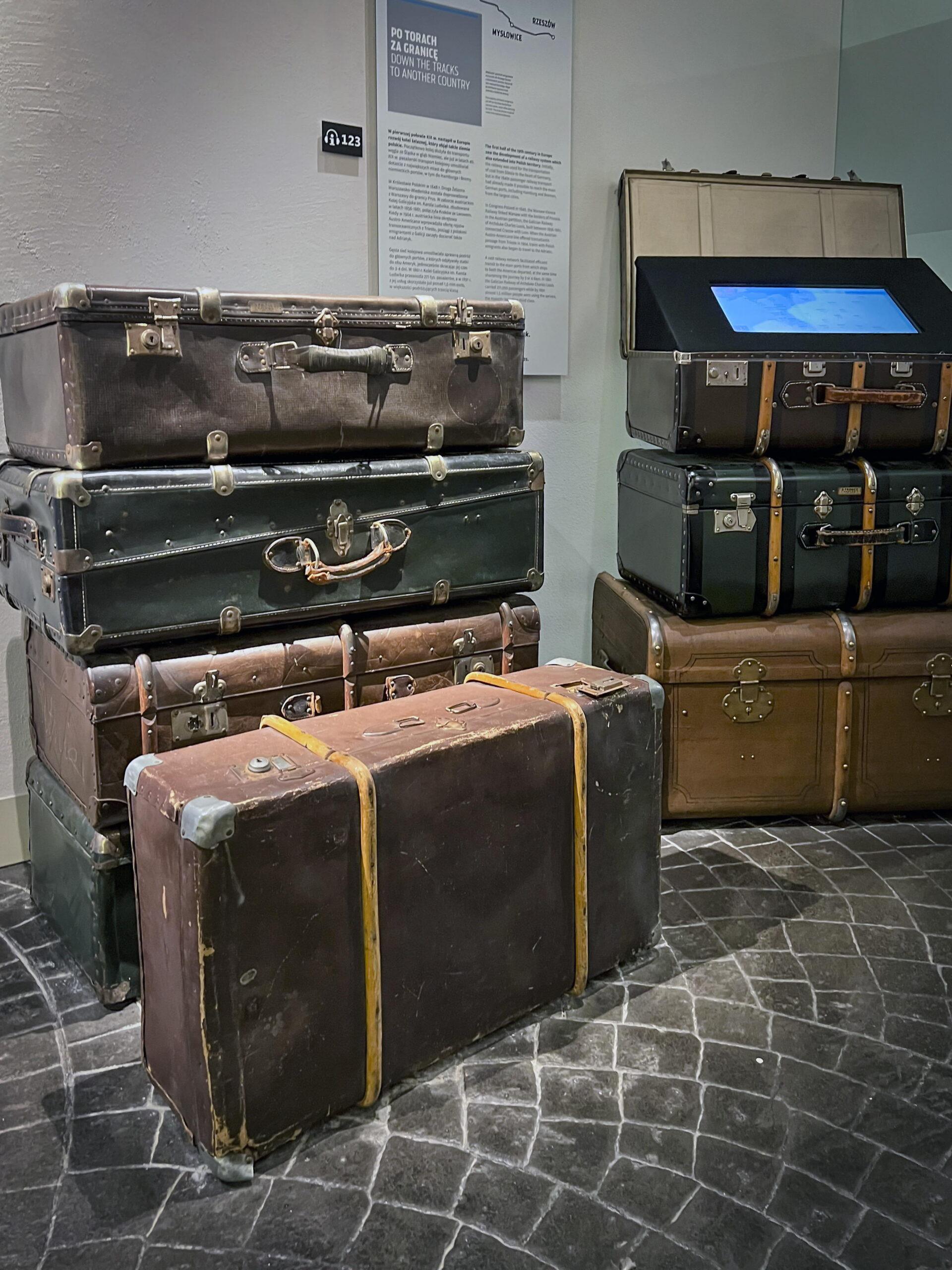
If you want to understand modern Poland without stepping into another battle-scarred castle, take the train to Gdynia and head for Polska 1. The Emigration Museum (Muzeum Emigracji) sits in the city’s historic Marine Station, the very hall from which millions of Poles boarded transatlantic liners in search of work, freedom, or a fresh start. It blends personal testimonies, multimedia installations, and artefacts to trace two centuries of departures and returns – from 19th‑century economic exodus to post‑war political exile and today’s EU‑era mobility.
The building itself is a monument to departure: high ceilings, art‑deco details, and the palpable sense of thresholds crossed. Plan on 90 minutes to two hours; the permanent exhibition is dense but well-paced.
More info: https://polska1.pl/
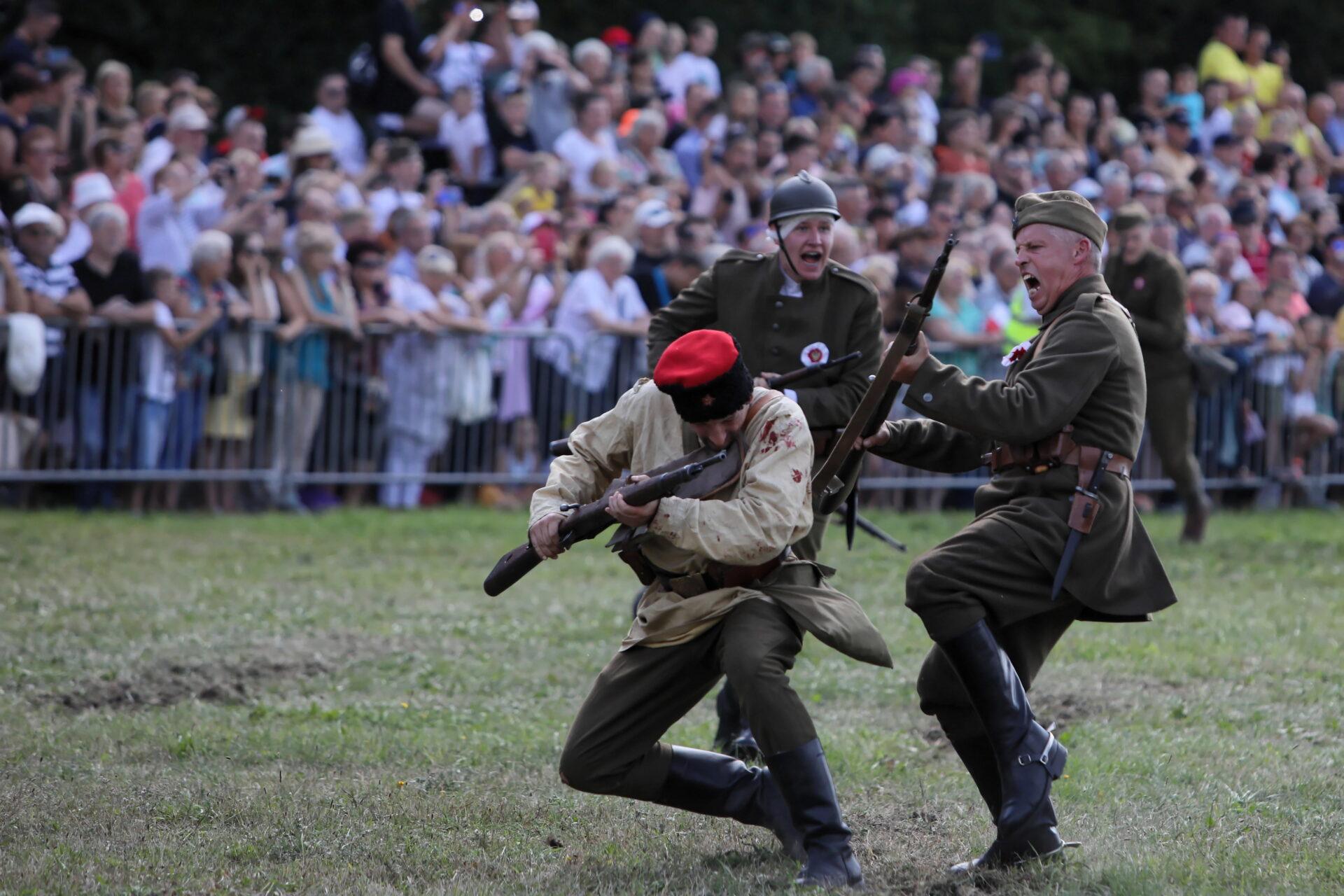
In August 1920, with the Red Army at the gates of Warsaw and half of Europe bracing for Bolshevik revolution, Poland pulled off what diplomats later called the 18th most decisive battle in world history. The “Miracle on the Vistula” (Cud nad Wisłą) was not divine intervention – though the date, 15 August, conveniently coincides with the Feast of the Assumption, which helped the legend stick. It was a daring counter‑offensive that rolled up the Soviet front and sent Lenin’s westward dream into disarray. Had it failed, Warsaw would likely have fallen, the newly reborn Polish state might have been strangled in its crib, and communist agitation could have surged into Germany and beyond.
The battle secured independence regained in 1918, became the symbolic birth of the modern Polish army, and is commemorated every 15 August as Święto Wojska Polskiego (Polish Army Day). The narrative also blends military brilliance with national mythmaking. For Poles, then and now, the battle is both a historical hinge and a morale booster: proof that when the map looks grim, improvisation, nerve, and a bit of faith can rewrite it.